
ZZBio officially releases its new-generation gradient digital PCR chip (multivolume partitioning), extending the linear range of conventional digital PCR 100-fold to 7 orders — fully meeting wide-dynamic-range, high-sensitivity scenarios such as minimal residual disease (MRD) detection.
Why MRD Quantification Is So Hard at Both Ends
After curative treatment, the variant allele frequency (VAF) of circulating tumor DNA (ctDNA) in peripheral blood often falls to 10⁻⁴, 10⁻⁵ or lower. Accurate MRD quantification must meet two requirements at once: detect and quantify very few mutant molecules against a large wild-type background, while accurately reporting the total amount of that high-abundance background DNA — the former as low as single copies, the latter at 10⁵–10⁶ copies. Conventional dPCR cannot cover both ends within its linear range: diluting the sample loses low-copy mutants (missed detection); not diluting saturates the partitions beyond what Poisson statistics can correct (quantification distortion).
Three Routes to a Wider Linear Range — and ZZBio's Answer
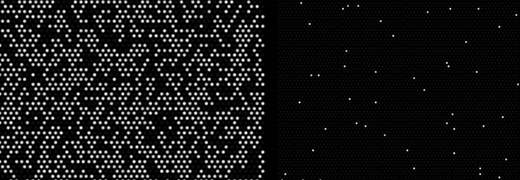
Three approaches are common: first, merging partitions across multiple chips to enlarge the effective partition count (per Bio-Rad's Rare Mutation Detection Best Practices Guidelines) — reagents, consumables, labor and precious clinical samples all scale up with chip count, raising cost significantly. Second, shrinking partition volume to massively increase partition count — demanding far higher microfluidic fabrication precision and manufacturing cost. Third, improving the partition design itself: integrating micro-reactions of different volumes on one chip, expanding the linear range without a significant chip-cost increase — this is ZZBio's answer, the volume-gradient dPCR chip: two partition volumes integrated on a single chip, with small partitions for accurate quantification of high-concentration templates and large partitions for detecting and quantifying low-abundance trace targets. One chip, one reaction, 7 orders of magnitude — unchanged workflow and controllable cost, ready for commercial deployment.
What a Wide Linear Range Unlocks
With a 7-order-of-magnitude linear range, the ZZBio gradient dPCR chip brings new value to applications where high- and low-abundance targets coexist.
- Oncology MRD/ctDNA monitoring: trace mutant targets and high-abundance background quantified simultaneously in one reaction — no chip merging, no dilution, saving reagents and sample
- Cell & gene therapy: high-concentration metrics such as AAV genome titer quantified in parallel with trace process impurities like residual host-cell DNA and residual plasmid DNA on the same plate
- Vaccines & biologics: direct quantification of high-concentration bulk while monitoring process impurities
- Reference materials & standards assignment: high-concentration samples assigned directly, avoiding cascading uncertainty from serial dilution — more reliable results
- Research & clinical testing: samples with coexisting high/low-abundance targets completed in one run
The ZZBio dPCR Chip Matrix
With this launch, the ZZBio dPCR chip matrix is richer than ever: the gradient chip (dual large/small partitions for wide-dynamic-range scenarios such as MRD), the high-sensitivity chip (large partitions for trace and rare targets), and the standard chip (general absolute quantification) — covering applications from trace detection to ultra-high-concentration assignment. On its open digital PCR platform, ZZBio opens instrument, chip and reagent customization plus testing services to IVD companies, research institutions and industrial users in pharma and food.